
'This Is Not About Running'
Mary Cain book is powerful, important

Alberto Salazar was my hero.
When I started running, back in 1980, Salazar was near the peak of his greatness as a long-distance runner. In the spring of 1982, my senior year in high school, I was one of the only distance runners on our team. I was young and eager to improve.
After track practice some afternoons, I was known to run extra loops on the sidewalks around our school. The shot putters, driving away after practice to go get some pizza, would yell out, “way to go Salazar” or “do another lap for me, Salazar.” I puffed out my skinny frame with pride. Even jokingly, being compared to the great Salazar meant something to me.
Back then.
As I continued in my running journey, quickly graduating to marathons, Salazar was still very much in my orbit. He won the Duel in the Sun, the famed mano-a-mano battle with Dick Beardsley, at the Boston Marathon in 1982. A year later, I completed my first marathon.
In 1984, Salazar represented the USA at the Summer Olympics in Los Angeles. In his prime, he won New York. He won Boston. He was among the best in the world, willing to work harder than anyone else. A great role model for a young, aspiring runner like me.
Back then.
Although I still admired his tenacity, his willingness to push himself to the brink in races, some of the Salazar luster wore off. Like so many top level athletes, Salazar was edgy. He was brash. I felt he was arrogant, a trait I do not admire. So while I respected and emulated him as a runner, I was not a fan of his approach and his attitude.
Fast forward a few decades.
Salazar became an icon at Nike, the behemoth sports empire at the forefront of TrackTown USA (Eugene, Oregon), and USA running in general. He became a coach at the Nike Oregon Project.
Once again, he was the face of American running – this time in a similarly relentless quest to put American distance running back on the map, as it was when he was one of the best in the world in the 1970s and 1980s.
Ah, but once again, that Salazar brashness, the arrogance, the edginess, was never far from the surface. While he was a key figure in the resurgence of American distance running, the lurking shadow and whispers of untoward activities always dogged him, and his athletes.
Eventually, Salazar was permanently banned from the sport – first in 2019 because of doping practices with the Oregon Project, and then in 2021 due to sexual and emotional misconduct with female athletes he coached – including Mary Cain.
Mary Cain was a great runner, a prodigy who hit the world stage with success – while still in high school! More than a decade later, Mary Cain is still relevant. She is a brave young woman with a story to tell.
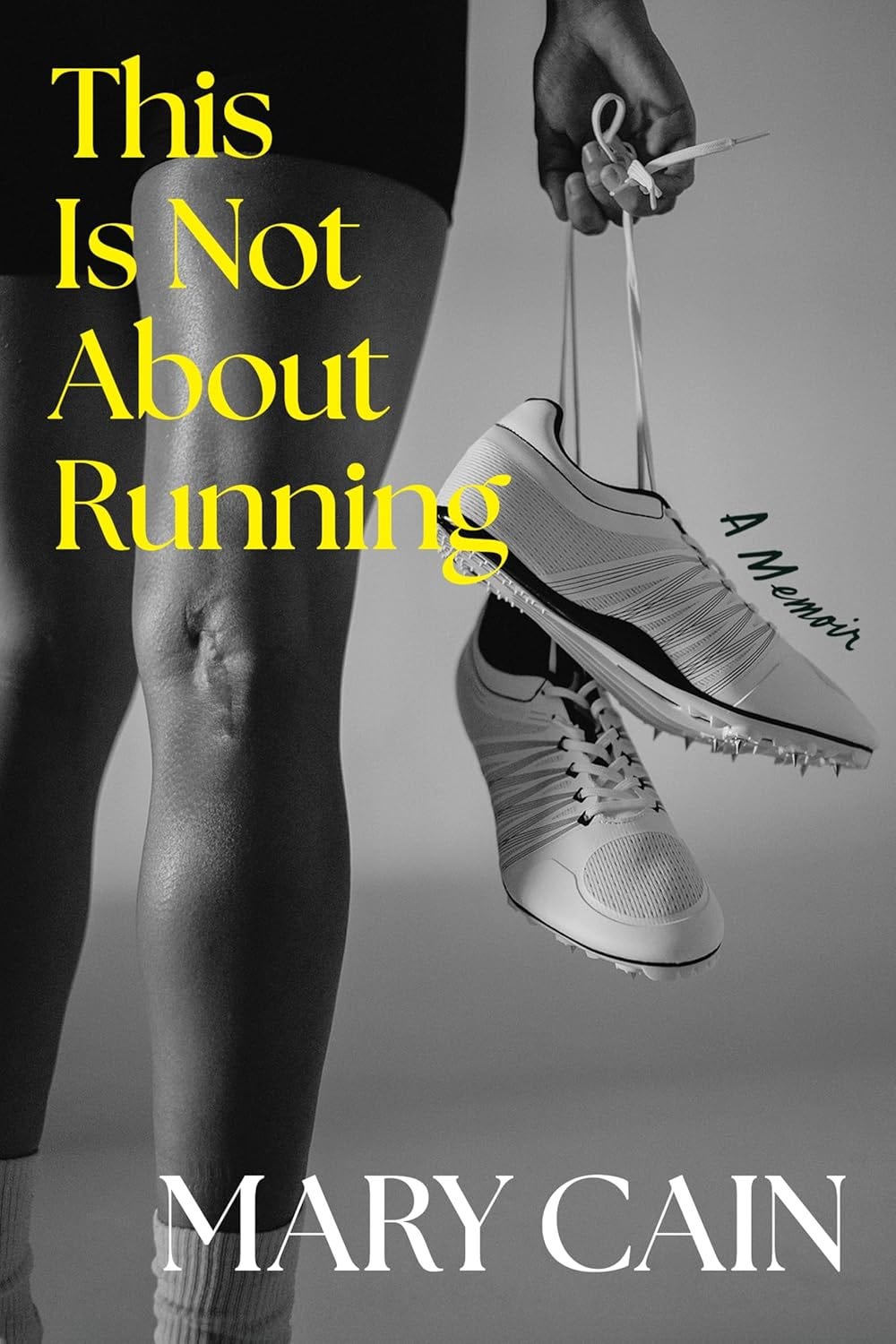
Her new book, a memoir entitled “This Is Not About Running,” was just recently released. It is a courageous story of a rollercoaster running journey. She talks openly about her mental health struggles, with disordered eating and the toxic state of the Oregon Project, led by the legendary Salazar.
This book is a compelling must-read. I listened to the audiobook, narrated by the author. Alert readers know that I am an avid consumer of audiobooks. With this title in particular, I highly recommend the audiobook format for this book.
Mary Cain’s voice trembles and cracks at times as she recounts some of her most horrific moments – a large number of them under the supposedly watchful eyes of Salazar. It’s a beautiful performance. And while the topic is so troubling, her presentation is so spellbinding that you won’t want to stop until you are done – I easily knocked it out over a recent two-day period.
The dark topics in this book could trigger anxiety, especially among young female runners who perhaps have struggled with these demons. It is still worth powering through, especially for women’s runners or parents/loved ones of young women runners in high school and college. The phrase “cautionary tale” only scratches the surface.
Kara Goucher’s 2023 book, “The Longest Race,’’ was part of the avalanche that exposed the dirty Nike Oregon Project empire. Salazar was the biggest name (and, arguably, the biggest culprit), but the whole system was broken, and Mary Cain absolutely was victimized on so many levels.
Sadly for her, this followed a pattern that started in her middle school and high school running days. I listened with shock, dismay and disbelief at her many stories. She tells them masterfully in vignettes; the book is broken into 139 “chapters” – all of which are really just short stories. She also writes the entire book in the present tense, not in the past tense. Taken in its entirety, this format packs a vivid punch.
This was an important book for me to read as well, a roadmap of all the things that we as coaches should NOT do, all the pitfalls on the road to success that some coaches might succumb to as we chase that next big meet or big race. In our three-season calendar, there’s ALWAYS a next big something.
But this isn’t about coaches, although those bad actors play a large role in her many calamitous moments in her younger life.
This is about Mary Cain, and her very important story. She had the courage and audacity to tell it, echoing the pain of countless young women who share her trauma but never had their story told or never had their story heard.
Cast aside any mixed reviews of this book; it’s likely just nitpicking. This is an important, groundbreaking book -- an enduring story that needs to be told. And, needs to be heard.
It is scary how many bad coaches there are at every level. I greatly benefited in my athletic and personal life from my relationship with my HS coaches. I recently got to visit with my HS head coach along with my teammates at our 50th HS Reunion. The reunion with our coach was emotional. My college days were the total opposite under two different coaches. My best year of running in college was my senior year when I quit the team, started training on my own, got strong and healthy again, and was winning or placing in races in and around a very competitive Buffalo running scene. Thankfully the college coaches did not destroy my love for the sport.
Thanks for this post, Pete! I’m almost done reading the hard copy of the book, but I might go back and listen to the audiobook while I walk and run. I agree, this is a powerful and important book in women’s running. It definitely shows what can happen when young talent is pushed to the brink by coaches and a system that is win-at-all-costs. Kara Goucher’s “The Longest Race,” Alexi Pappas’ “Bravey,” and Mary Cain’s book are some of my favorites in running because they are so honest and raw. They capture both the moments of joy and love for the sport, as well as the painfully truthful dark side of being a female runner dealing with mental and physical stress from internal and external factors.